What to trade in the meme coin market and why disciplined exit planning beats hype
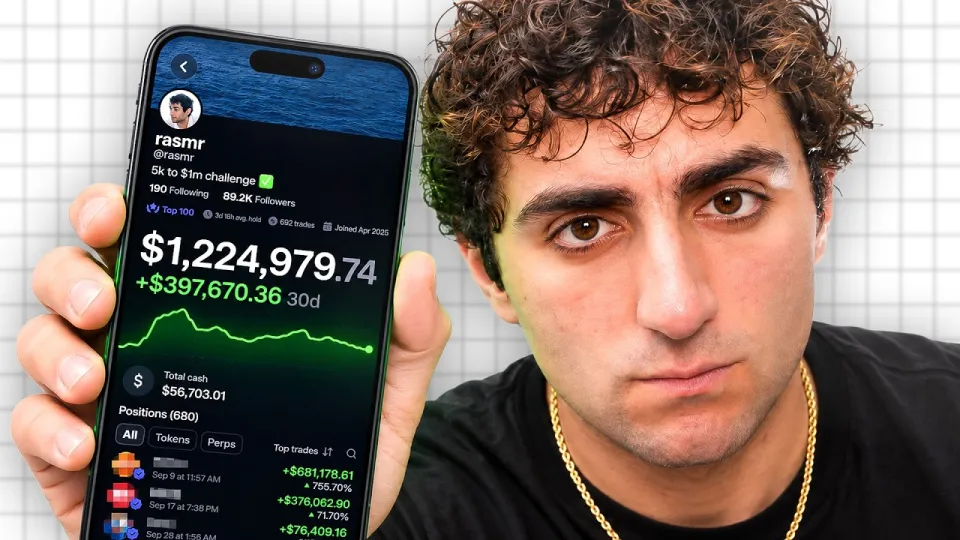
Video: 5 Years of Memecoin Knowledge in 12 Minutes
Need articles like this for your video? They help promote it on YouTube and Google — order them in the Telegram bot @sat_sit_bot. It writes articles around your video, embeds the video and publishes them on popular niche websites (no ads). Your first 50 articles are free.
· based on the channel rasmr
Key takeaways
- Meme coin prices are driven by narrative and attention, not cash flow, so a coin is only as good as the story that keeps new buyers arriving.
- Market cap, not unit price, is the number that matters: a token at $0.00001 with a huge supply can already be expensive.
- The most common way traders lose profits is refusing to sell, round-tripping a position that was once up 50-100%.
- Liquidity and holder concentration reveal rug risk faster than any chart pattern.
- Emotion-free rules set before entry, including a sell plan, are the single most repeated lesson in the rasmr video's comments.
The best approach to the meme coin market is to treat it as a narrative-and-liquidity game rather than an investment in a product: pick coins with a story that can keep attracting new buyers, size positions so a total loss is survivable, and decide your exit before you enter. Tools such as the fomo.family trading platform give you the execution and charting layer, but the discipline has to come from you. This guide builds on the lessons in rasmr's 12-minute retrospective on five years of meme coin trading and on the questions his audience keeps asking.
What a meme coin actually is and why price moves so fast
A meme coin is a token whose value rests almost entirely on community attention and narrative rather than revenue, so its price is a function of how many new buyers a story can pull in before the flow stops. That is why the same chart pattern that takes a large-cap weeks to complete can play out in a token within hours.
Three mechanics explain the speed:
- Thin float and low liquidity. Many launches hold a large share of supply off the market, so modest buying moves price violently in both directions.
- Narrative rotation. Capital in this segment moves in packs: a fresh story (an AI angle, a celebrity tie-in, a cultural moment) drains liquidity from older coins within days.
- Reflexive attention. Price action itself is marketing. A green candle brings buyers who never read the tokenomics, and their exit is what produces the red one.
Because of this, the useful question is never "is this coin good?" but "who buys after me, and at what market cap do they stop?"
How to read market cap and supply instead of unit price
Market cap, calculated as price multiplied by circulating supply, is the only comparable number across meme coins, and unit price is mostly cosmetic. A token trading at a fraction of a cent with a supply in the quadrillions can be far more expensive than one trading at a dollar.
Practical checks before any entry:
- Fully diluted valuation versus market cap. A large gap means unlocks or hidden supply can hit the market later.
- Circulating supply share. If only a small percentage floats, the chart is being moved by a thin book.
- Comparable caps. Ask what the biggest coin in the same narrative is worth; if your target is already near that level, the upside is limited and the downside is not.
- Round numbers as exit zones. Traders cluster sells around psychological caps (hundreds of millions, one billion), which is where momentum typically stalls.
This is the mechanic behind the most liked complaint under the video: a position that was up seven figures on paper and was never sold. Unrealized profit in a thin market is a quote, not money.
Which meme coin narratives tend to hold up and which fade
Narratives with a repeatable content engine survive longer than one-off jokes, because they keep generating reasons for new people to look. In practice, coins attached to an ongoing cultural event, a recognizable figure, or a technical theme with continuous news flow tend to hold attention across weeks rather than hours.
A simple durability test:
- Can you explain the story in one sentence to someone outside crypto?
- Is there a stream of new material (announcements, events, memes) or only one launch post?
- Is the community producing content on its own, or is a single account doing all the posting?
- Does the token have any utility hook, even a thin one, that keeps it in circulation?
Coins that fail this test are not automatically bad trades, but they are short-duration trades. Treating a one-day narrative as a long-term hold is where most losses originate.
How to spot rug risk before you buy
Rug risk is mostly visible in the token's structure before the chart shows anything, so check contract and holder data first and price second. The audience question about what makes a coin rug is the right one to ask, and it has concrete answers.
Red flags worth screening for:
- Concentrated holders. A handful of wallets holding a large share of supply can dump on any bid.
- Unlocked or mintable supply. Contract functions that allow new tokens to be created dilute holders at will.
- Thin liquidity with removable pools. If the team controls the liquidity, it can be pulled in a single transaction.
- Artificial volume. Wash trading creates the appearance of interest without real buyers behind it.
- Aggressive marketing to outsiders. Pressure to buy immediately, before you can check anything, is itself a signal.
None of these checks guarantees safety, but they filter out the majority of obvious traps and take minutes.
Why emotion is the most expensive input in meme coin trading
The most consistent theme in the feedback on rasmr's breakdown is that emotional decisions, not bad picks, destroy accounts. Two behaviors dominate: refusing to take a loss because the chart "has to come back," and refusing to take profit because it "can go higher."
A workable rule set looks like this:
- Define the loss before entry. Decide the percentage or market cap at which the thesis is wrong and exit there without renegotiating.
- Scale out on the way up. Sell portions at predetermined caps rather than searching for the top.
- Write the plan down. A plan in a note is harder to abandon than an intention in your head.
- Separate entry size from conviction. Position size should reflect how much you can lose, not how excited you are.
- Stop watching after you exit. Re-entering out of regret is how one bad trade becomes three.
For newcomers with small capital, the practical version is to start with amounts where a total loss changes nothing about your month, and to treat the first several months as tuition for learning market cap behavior rather than as income.
Common questions traders ask before their first meme coin trade
Most beginner doubts cluster around timing, size and trust, and each has a practical answer rather than a guarantee. The recurring ones are worth addressing directly.
- When is it too late to enter? When the coin is already near the market cap of the leader in its narrative and the story has no new material coming.
- How much should I allocate? An amount you can watch go to zero without changing your decisions, because many of these positions will.
- Should I follow calls from private groups? Early information is real, but so is the risk that you are the exit liquidity; verify supply and holders yourself.
- Is a new cultural coin (a game release, a film, an event) a good buy? Only if you have a specific exit level, because event-driven coins usually peak when the event does.
Useful links
- fomo.family registration and trading access — the platform link from the video.
- Catalyst trading Discord — the community group referenced by the channel.
Final thoughts on trading meme coins with a plan
The meme coin segment rewards preparation far more than prediction: narratives rotate, liquidity is thin, and the traders who keep profits are the ones who decided where to sell before the chart forced the question. Market cap and supply data tell you what a token actually costs, holder and contract checks tell you how easily it can collapse, and a written exit plan protects you from the two emotions that cost the most. rasmr's 12-minute retrospective is a compact summary of those five years of lessons, and it is worth watching alongside a written checklist of your own. If you want to put the framework into practice, start with a fomo.family account and keep your first positions small.
Questions & answers
What is the single biggest mistake people make with meme coins?
Not selling. Positions that were up 50-100% frequently round-trip back to entry because the holder waits for more. Setting sell levels at specific market caps before entry, and executing them in portions, converts paper gains into realized ones.
How do I tell whether a meme coin can rug?
Check the contract and holder distribution before the chart: concentrated wallets, mintable supply, removable liquidity and wash-traded volume are the main warning signs. None of these checks is definitive, but they eliminate most obvious traps in a few minutes.
Is unit price a useful way to judge whether a coin is cheap?
No. Price per token depends entirely on supply, so a coin at a fraction of a cent can have a larger market cap than one trading at a dollar. Compare market cap and fully diluted valuation against other coins in the same narrative instead.
Should beginners follow calls from private trading groups?
Early information can be genuine, but being in a group does not remove the risk that you are providing exit liquidity. Verify supply, holders and liquidity yourself, and size positions so a total loss is acceptable.
Source: 5 Years of Memecoin Knowledge in 12 Minutes · Markdown version